[24]7.ai · 2015–2017 · Content strategy and experiments
Words that change whether people chat
A chat invitation is a few words on a website, and small changes to them moved real revenue. I managed [24]7's product content strategy, so copy was treated as design and tested like design.
- Role
- Director of product design. Managed the content strategist and UX writer, set the content approach and worked with the optimization team to test it
- Team
- Content strategist, designers, optimization and data teams, account leads
- Clients
- Hilton, Sears and others across retail, travel, telecom and finance
The problem
Chat only helps if visitors start one. The invitation is the first thing they see, and most of them ignore it. Invitations were written once, generically, and rarely revisited. Nobody could say whether a different message would have done better, because nothing was being compared.
Approach
We treated content as part of the interface. The content strategist and I wrote down what product content strategy meant at [24]7: governance in the form of a writing guide and shared vocabulary, one source of truth for text strings, regular content audits, and a habit of working beside engineering, design and data science instead of handing off words at the end.
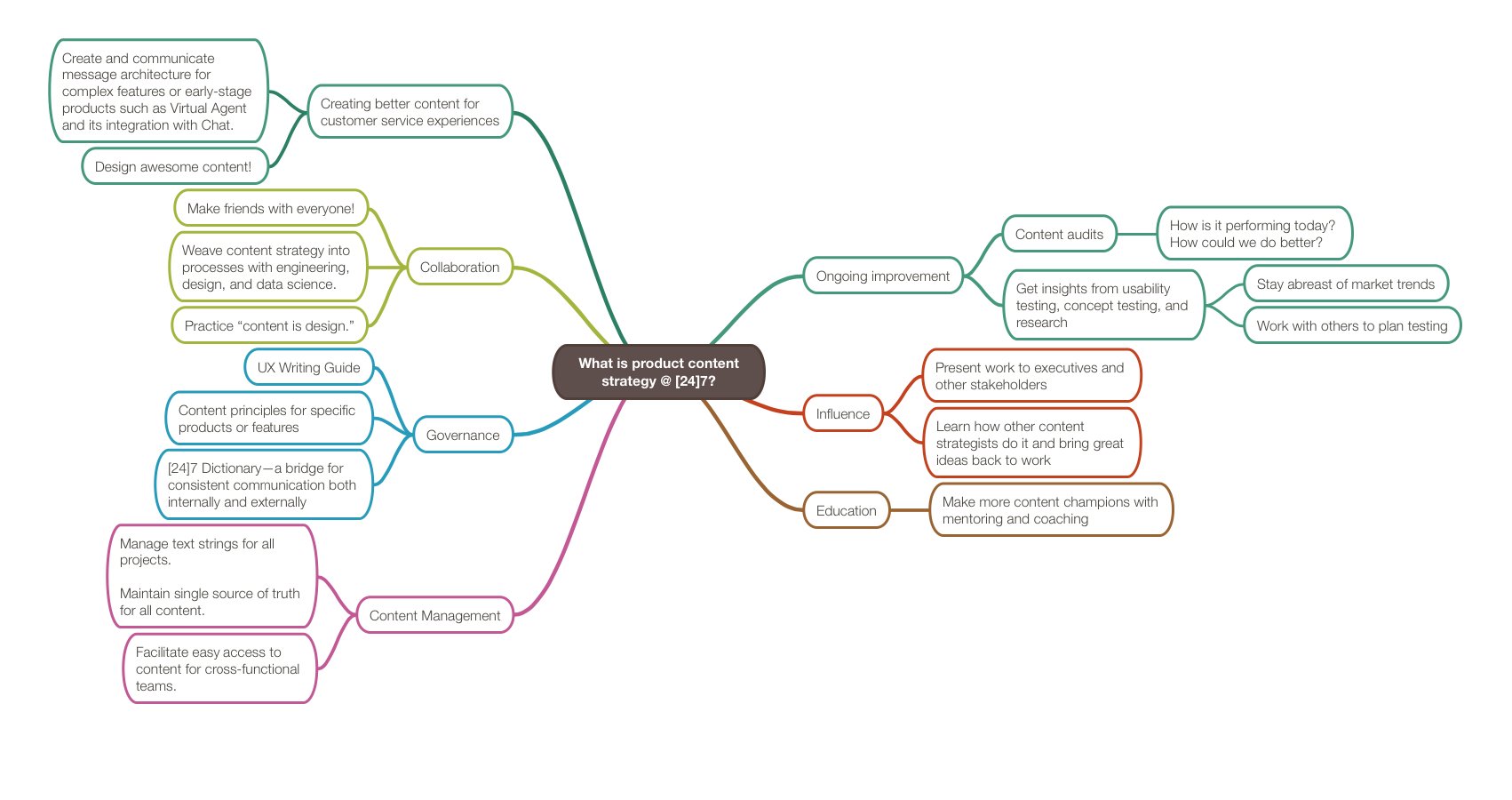
For invitations, the main idea was context. Instead of one message for every visitor, write for where the visitor is and what they're probably trying to do, then run it against the generic version.
Measuring what an invitation does
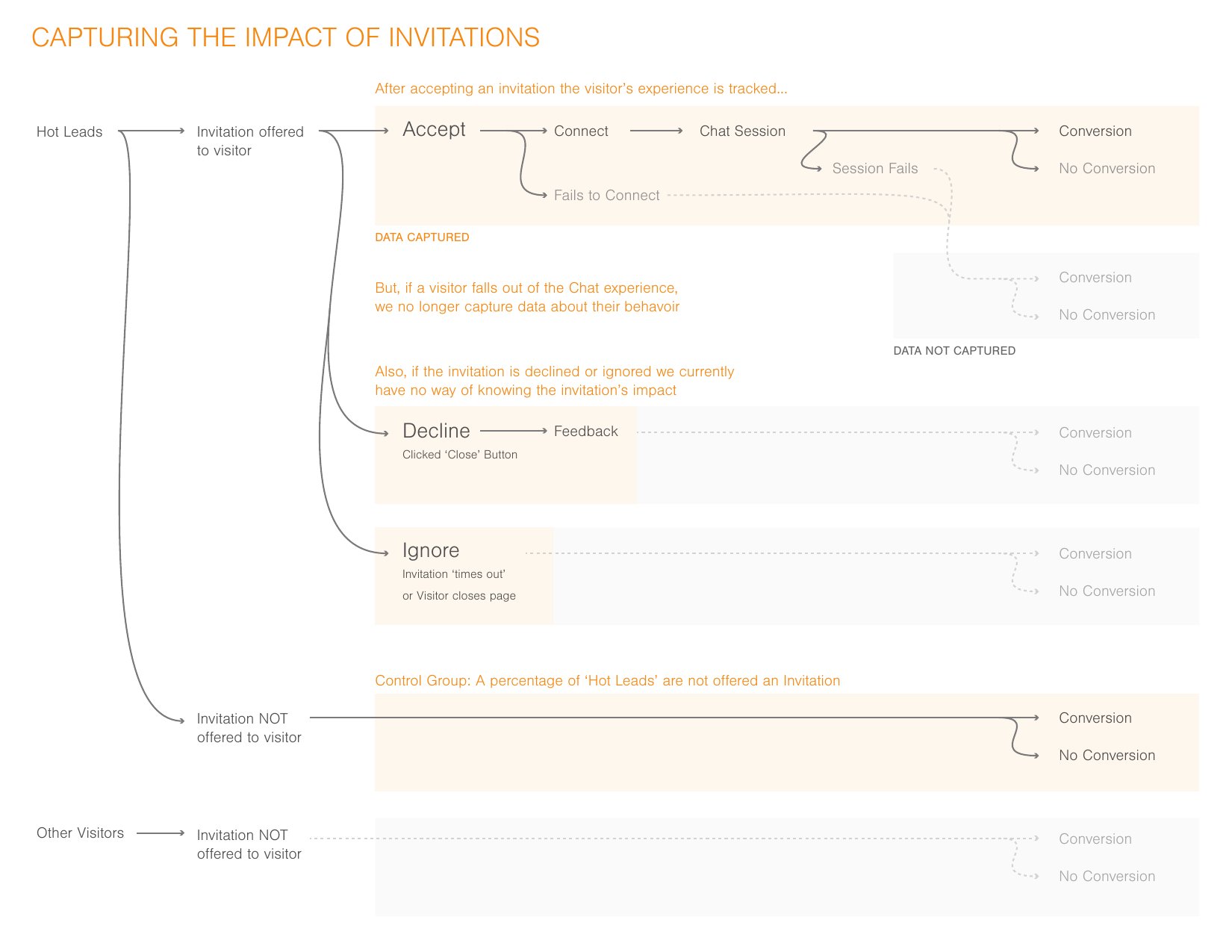
With a colleague I also mapped what we could and couldn't see. Once someone accepted, we tracked the chat through to conversion. If they declined or ignored the invitation, we knew almost nothing. And without a control group that never saw an invitation, we couldn't say what the invitation added.
Results
- Hilton: contextual invitations beat the generic ones by 6.21%. It was the first significant lift from contextual invites, and the optimization team expanded them to all traffic.
- Sears: a contextual invitation on one Sears site raised chat acceptance by 2%, worth about $74,000 a year in revenue, as reported by [24]7's head of network operations.
The design studio ran many of these experiments in the 2016 to 2017 year, using the same approach. Across clients, test invitations lifted chat acceptance by the following amounts. These are studio results, achieved by the whole team.
- Sears (another property): +144%
- Grainger: +66%
- SingTel: +40%
- Sears Online: +30%
- Best Buy: +18%
Voice for virtual agents
The same discipline carried into [24]7's first virtual agent, for Capital One. We described how the agent should sound: friendly, intelligent, knowledgeable, confident, efficient, and clear and to the point. We also settled how it engages, how it states the value and the order of the interactions. Writing that down gave everyone, inside the company and at the client, a shared picture of what the agent was.
Looking back
The thing I'd keep is a method: write a hypothesis about context, run it against the generic version, and decide from the number. The thing I'd change is the starting point. I'd build the control group and the declined-invitation tracking before writing a single new line of copy, so the first result was credible to everyone.